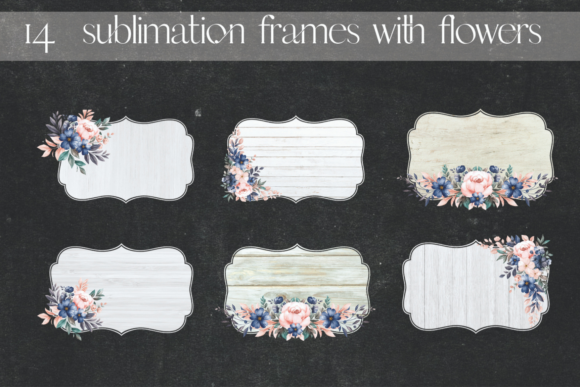
Sublimation White Wood with Flowers: A Designer's Review
I have spent years evaluating digital assets for real-world application, and I know that the difference between a great finished product and a disappointing one often comes down to the source material. Today, I am putting Sublimation White Wood with Flowers through its paces. This collection of rustic white wood frames paired with watercolor flowers is marketed as an illustration pack containing 14 PNG files intended for sublimation. However, as an experienced designer who frequently bridges the gap between digital graphics and physical embroidery, I want to offer a practical perspective on how this design performs when translated into tangible projects like custom apparel, boutique items, or personalized gifts.
The First Impression: Mood and Visual Personality
When you first open the folder for Sublimation White Wood with Flowers, the mood is immediately established. It feels soft, organic, and distinctly farmhouse-chic. The combination of the weathered white wood texture with delicate watercolor blooms creates a visual narrative that screams "handmade" and "curated." For an Etsy seller or a small business owner looking to create a cohesive brand identity, this aesthetic is gold. It suggests warmth and approachability, making it perfect for nursery decor, bridal shower favors, or spring-themed collections.
The layout of these illustrations is generally balanced, offering enough negative space within the frames to allow for text or monograms if you are using them as a base layer. However, there is a critical distinction to make right away: these are raster images (PNGs), not vector files. While they look beautiful on a screen, their scalability is limited. If you plan to use these as a machine embroidery design foundation, you must understand that you cannot simply trace them in your software and expect crisp results. They require significant interpretation and digitization work to become a functional embroidery file.
Real-World Application: From Screen to Stitch
Let me walk you through a scenario where I recently considered using this asset. Imagine you are preparing a batch of custom embroidered tote bags for a local craft fair. You want a rustic, floral theme that appeals to mothers and gardeners. You pull up Sublimation White Wood with Flowers and see the potential. The white wood frame provides a clean border, and the watercolor flowers add a pop of color without being overwhelming.
In a real production setting, however, the workflow changes. Since these are PNGs, you would need to import them into your digitizing software. You would then manually trace the wood grain and the flower petals to create paths for your stitches. The watercolor effect is particularly tricky. In embroidery, we rely on satin stitch for smooth edges and fill stitch for larger areas. To replicate the soft, blended look of watercolor, you might need to utilize multiple thread colors and varying stitch density. If you are creating a tote bag design, the wood texture could be simulated with a running stitch or a specific fill pattern, but it will never perfectly mimic the pixelated softness of the original PNG.
This process is entirely feasible for a skilled digitizer, but it requires time and expertise. If you are buying this expecting a plug-and-play solution for your embroidery machine, you will be disappointed. But if you view it as a high-quality reference image for creating a custom embroidery project, it is a valuable asset. The result can be stunning, especially on natural fabrics like canvas or linen, where the rustic vibe of the wood frame translates beautifully.
Where Caution Is Required
While the aesthetic is charming, there are specific scenarios where Sublimation White Wood with Flowers needs careful handling. First, consider the hoop size. Watercolor details often contain fine lines and subtle gradients. If you attempt to stitch this on a very small hoop, such as those used for baby hats or cap patches, the details may get lost or the fabric may pucker around the intricate wood grain patterns.
Fabric choice is another major factor. This design relies heavily on contrast. On dark fabric, the white wood frame might disappear unless you use a heavy underlay or a contrasting background fabric. On stretchy knits, like sweatshirts or t-shirts, the rigid structure of a wood frame can cause tension issues if the stabilizer is not chosen correctly. You might end up with a puckered mess rather than a crisp design. Similarly, textured fabrics like bouclé or thick fleece can hide the delicate flower details, making the final product look muddy.
If you are planning to sell these as commercial embroidery products, you must also consider durability. Items that undergo frequent washing, such as kitchen towels or aprons, need robust stitching. A design based on a PNG with thin lines might fray over time if the stitch density is too low. Always test the design on scrap fabric first to ensure the thread colors hold up and the stabilizer supports the weight of the embroidery adequately.
Impact on Product Value and Brand Trust
For a small shop product or a handmade gift, the execution of the design directly impacts customer trust. A well-digitized version of Sublimation White Wood with Flowers looks professional and intentional. It signals that you care about quality. Customers browsing an Etsy listing for a personalized gift will notice the difference between a sloppy, pixelated print and a clean, textured embroidery job.
Conversely, if the translation from graphic to stitch is poor, it can damage your brand reputation. A finished product that looks like a cheap sticker rather than a crafted item will not justify a premium price point. The rustic charm of the wood and flowers is a selling point; it adds character. When executed correctly, it elevates a simple tote bag or pillow cover into a boutique-level item. It creates a sense of recognition and professionalism that encourages repeat buyers.
Practical Notes for the Design Reviewer
Before you commit to using this asset in your next craft business venture, here are some essential steps to take. First, verify the licensing terms. Just because you bought the PNG files does not automatically grant you the right to sell finished embroidered goods made from them. Check the specific license agreement provided by the creator to ensure you are covered for commercial use.
Second, do not skip the mockup phase. Before cutting any fabric, create black and white mockups of the design. This helps you visualize the stitch density and ensure that the white wood frame will stand out against your chosen background. Compare light and dark fabric backgrounds to see which offers the best contrast for the watercolor elements.
Third, pay close attention to the thread colors. The watercolor flowers likely feature soft pastels. Ensure you have access to high-quality threads that match these shades. Cheap threads can break easily or fade quickly, ruining the delicate look of the flowers. Also, inspect the small details in the original PNG. If the flower centers are tiny dots, decide whether they should be filled with satin stitches or left as negative space.
Finally, remember that this is a digital embroidery file source, not a direct output. You are the bridge between the digital art and the physical reality. Use proper stabilizers to support the design, confirm your hoop size matches the scale of the artwork, and always run a test stitch on scrap material. Whether you are creating holiday embroidery pieces, baby embroidery for a new arrival, or custom apparel for a client, taking the time to properly interpret Sublimation White Wood with Flowers will yield a superior embroidered patch or garment.
In conclusion, this set of illustrations is a fantastic resource for designers willing to put in the work to digitize it. It offers a versatile, rustic aesthetic that fits perfectly into the current market trends for handmade and boutique items. By treating it as a creative blueprint rather than a ready-made stitch file, you can unlock its full potential and create products that customers will love.